
Well, it’s our last full tour day. We’ve gotton quite into the RS march mode! Tour, take a breather, eat, have another coffee, repeat.
Since we hit the mountains, I’ve added to my essential gear mittens (which I bought in Oslo), and my ear gators. I also got out my long johns which makes my quick dry pants warm. So now we have all layers available!
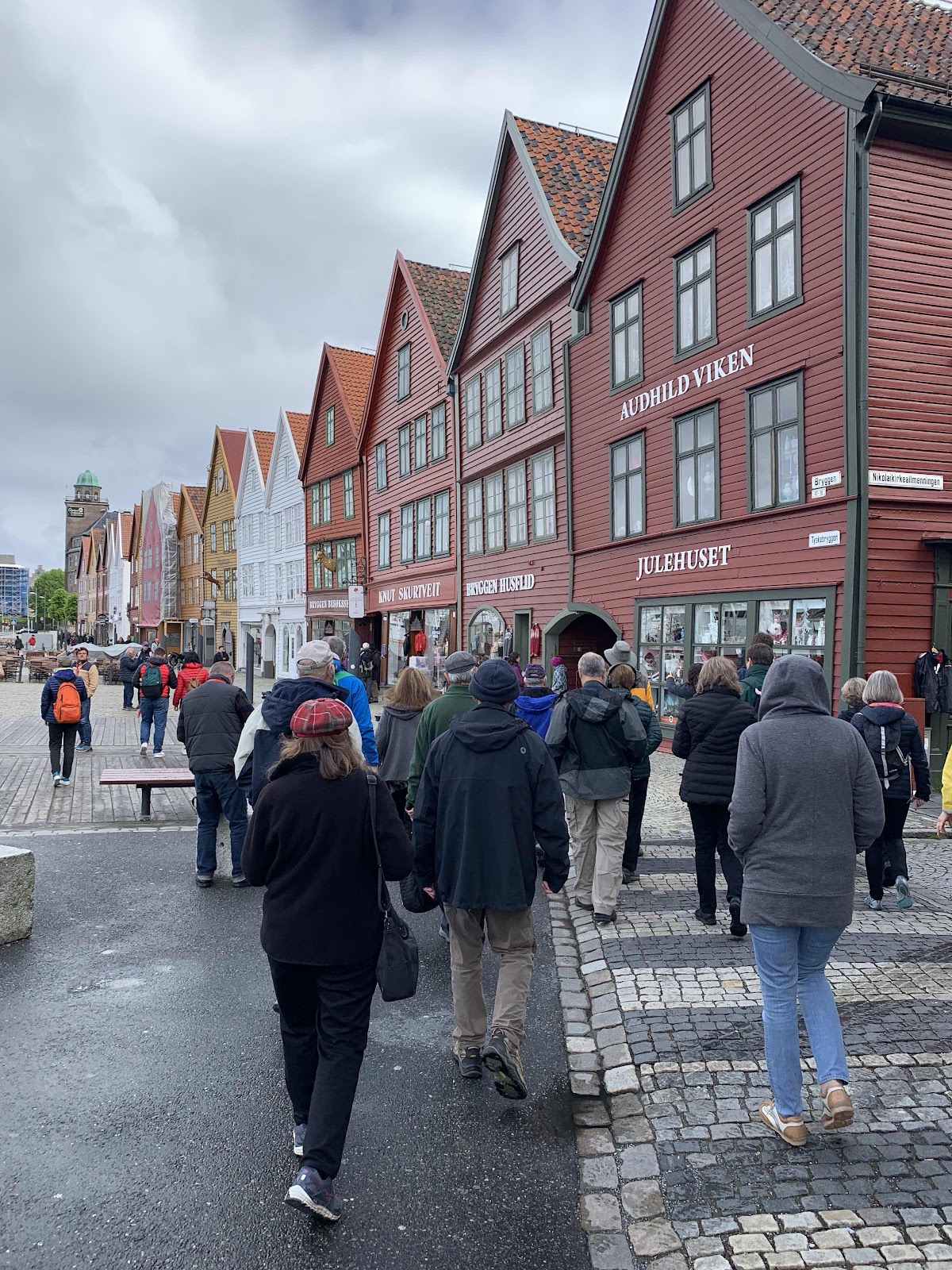
Bergen (more accurately Bryggen-the area of Bergen across from the docks) was the center of the Hanseatic trading league from 1370 to 1754. Shortly after the Plague cut the population in half in 1350, Germans established a trading center and brought order and prosperity to an otherwise devastated and extremely poor and disorderly Bergen. The Norwegian fisherman now had a well run market to sell their fish.
Bergen (more accurately Bryggen-the area of Bergen across from the docks) was the center of the Hanseatic trading league from 1370 to 1754. Shortly after the Plague cut the population in half in 1350, Germans established a trading center and brought order and prosperity to an otherwise devastated and extremely poor and disorderly Bergen. The Norwegian fisherman now had a well run market to sell their fish.
Bergen had many fires that would destroy the town, which would simply be rebuilt on top of the remains. So, since the remains aren’t as stable as solid earth, the buildings settle differently. Here’s some results:
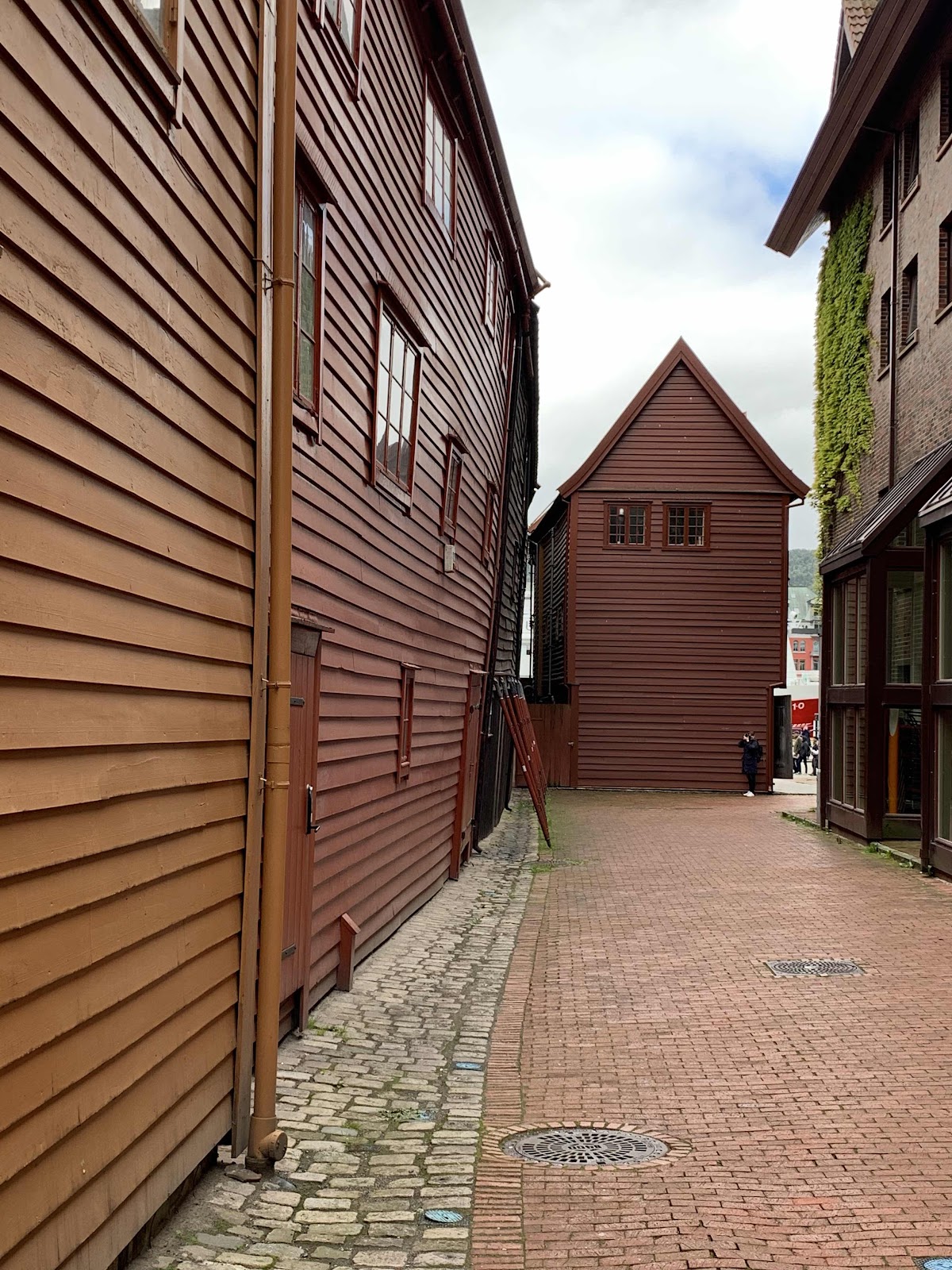

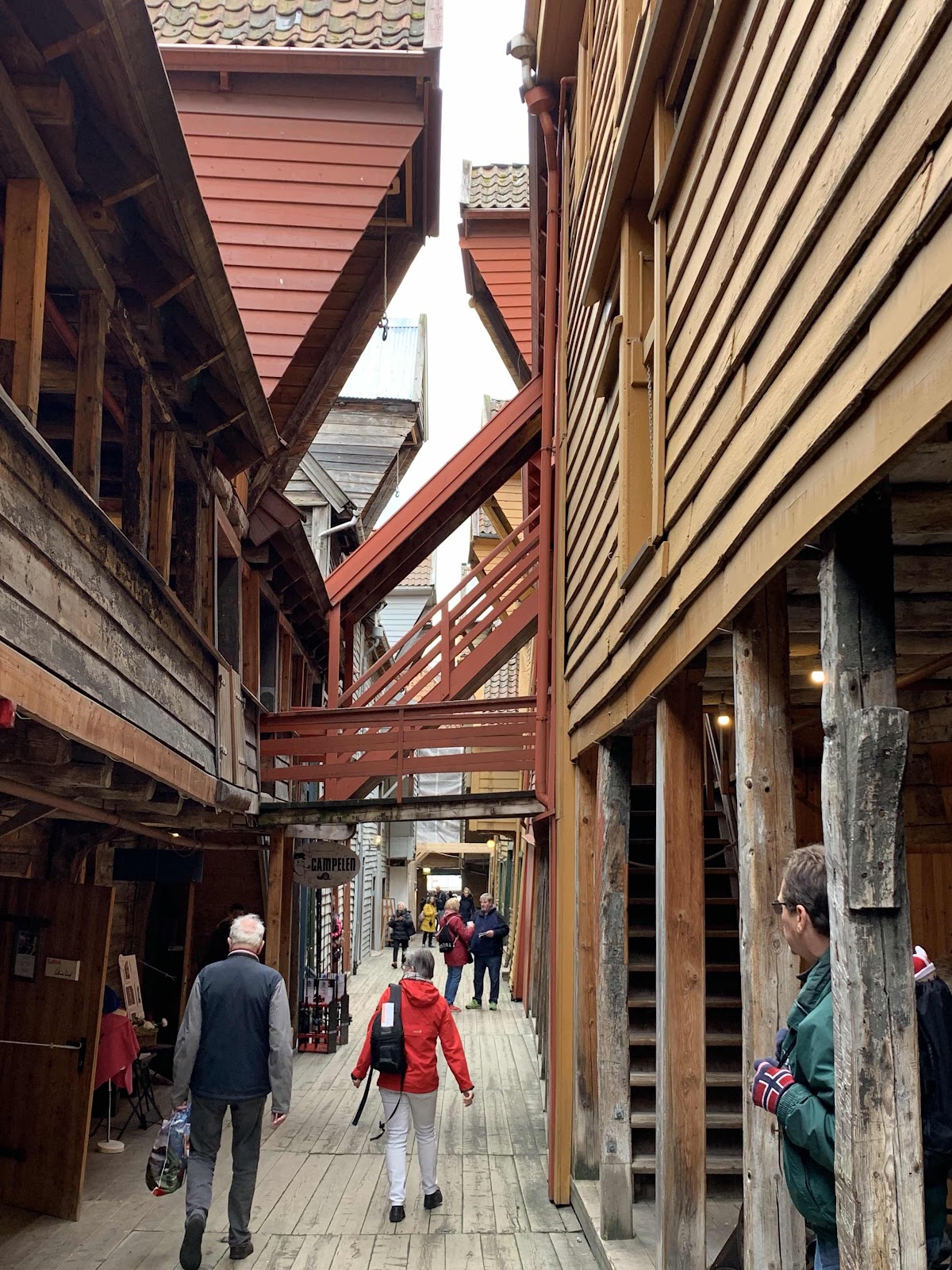
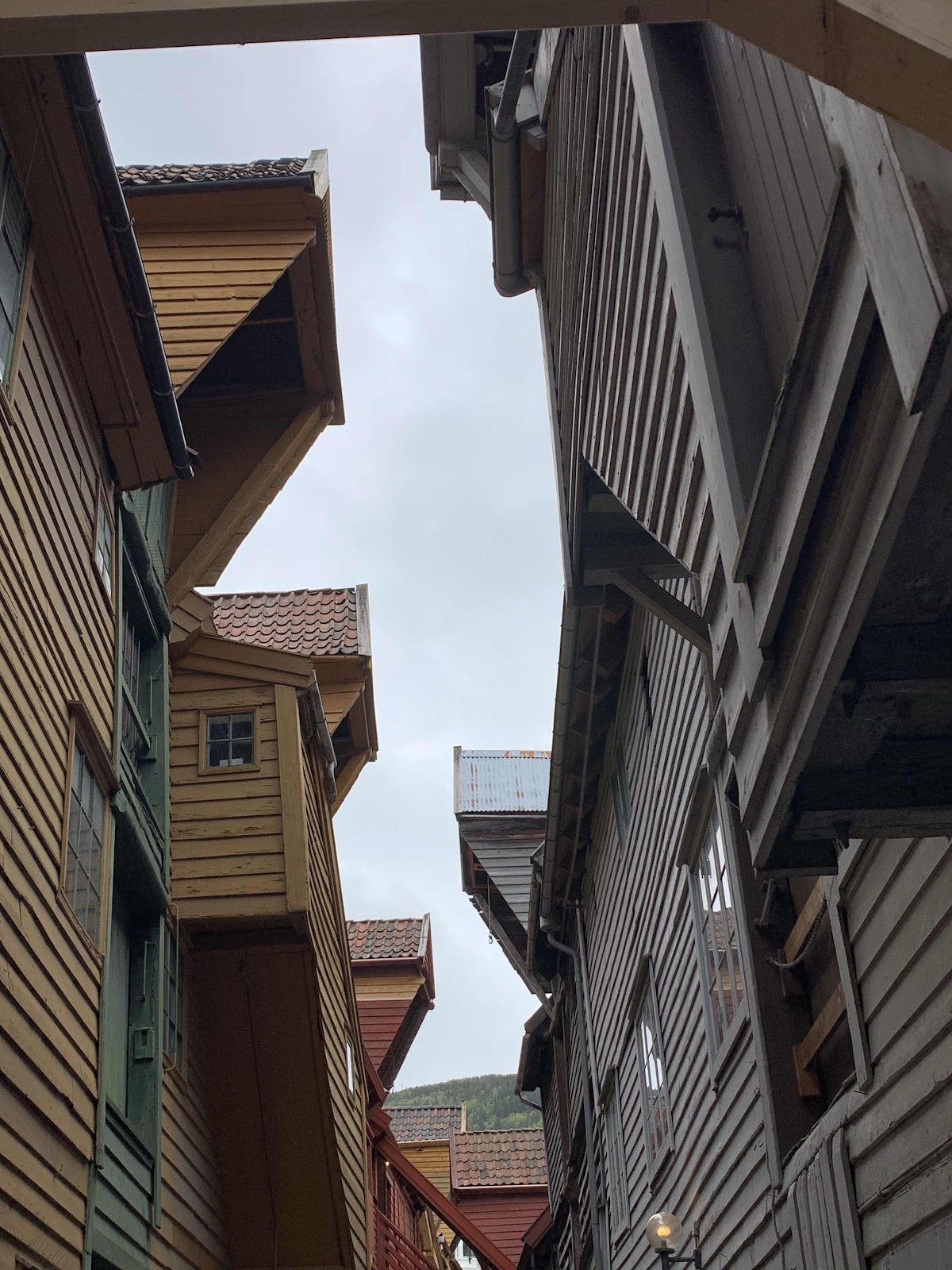
These dockside buildings, built afrer the last major fire in 1702 and pretty much unused since the Hanseatic league ended, were almost torn down in the 1950s. Germans were terribly unpopular after the occupation of Norway in WWII, and this Bryggen area represented that time. Fortunately an archeologist started digging around and found SO much more history that local opinion changed and the Bryggen area waa saved. It’s still being carefully restored.
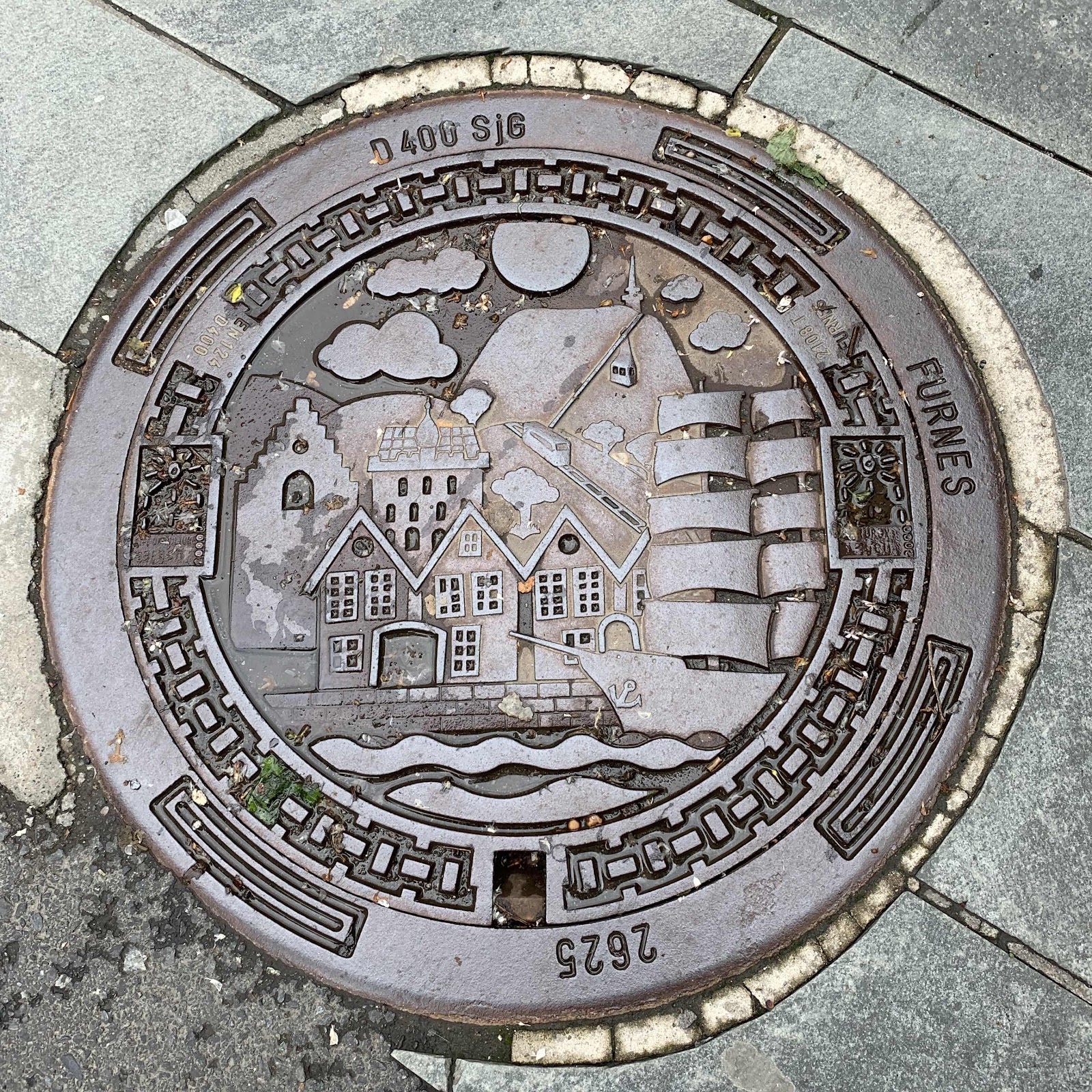
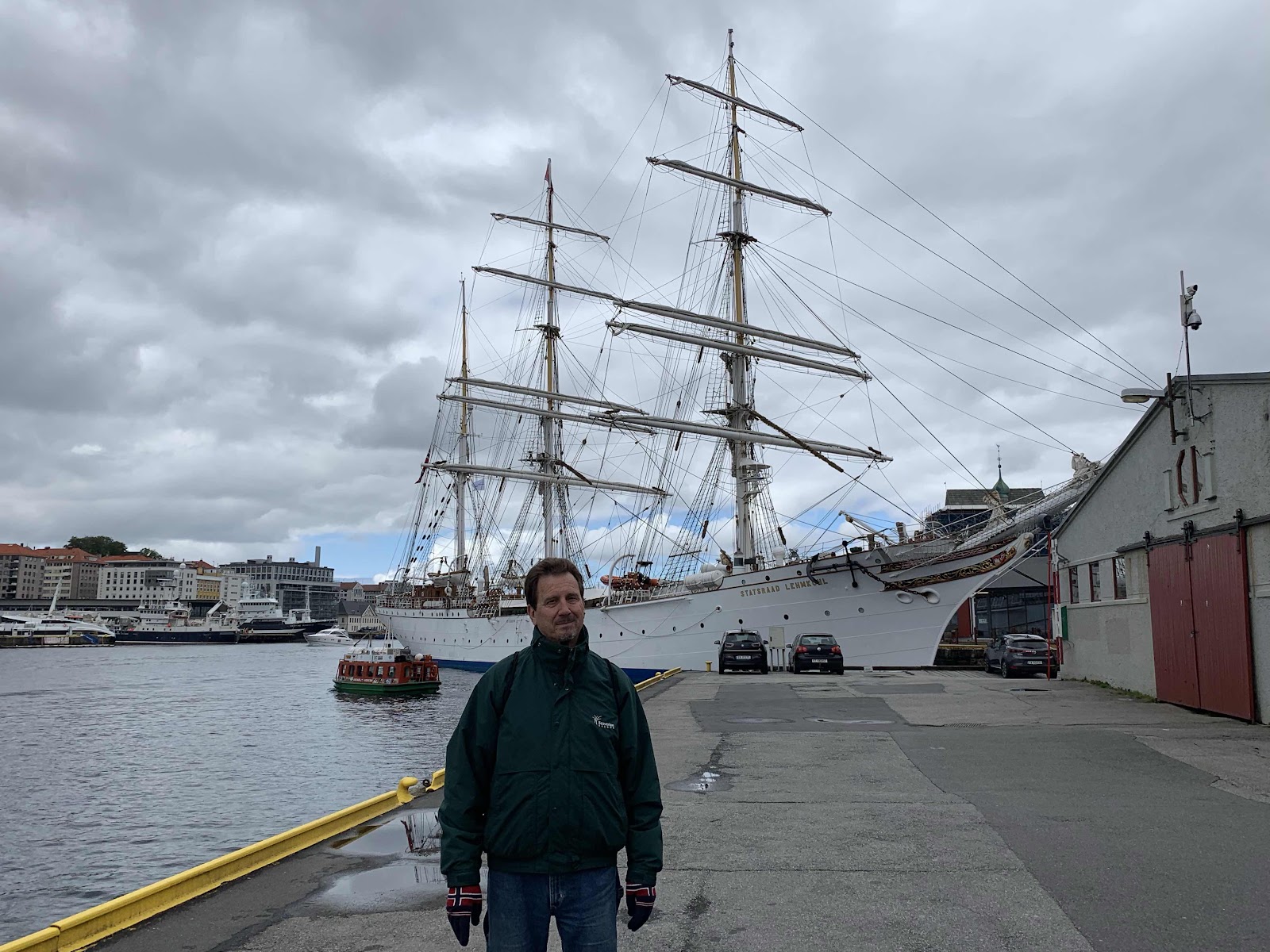
We notice really cool manhole covers here. I think each city has their own, specific to that area’s history. Here of course it’s the Bryggen history, along with the ships that sail the high seas, like this one!
The saying here in this fishing capital is ‘Cod is God’. Dryed cod, to be exact. Like this one, kind of...

Ulf can now say he’s ridden a cod! We’ve seen the multi-storied drying racks that the fish are dried on. Dried cod used to be food for nobility that for ceremonial reasons couldn’t eat ‘meat’ on many days of the year. It also became a majot export. We still see it in the huge fish market on the wharf here which is reminiscent of Pike’s Place in Seattle, except with seafood we totally don’t recognize! By the way...Norway currently exports 3 million tons of seafood each year!!
Now we’re recharging our batteries back at the hotel before we head out again in a bit.

No comments:
Post a Comment